Hello, and welcome to my new little slice of the Internet. My name is Paul Gaba, and it is an honor and a pleasure to greet you here.
This is not my first dabble into the world o' the blogger. I did this for a while when I had a MySpace page (which has since met its demise, along with the multitude of posts I contributed there), and I've inundated Facebook with them as well. I may very well see about transferring (or copying over) some of those previous blogs to this venue in the near future. We shall see.
If you want to get technical, I did quite a bit of blogging before the term "blog" even existed. Or before the Internet existed (depending on your sources). When I was a full-time journalist in college (1988) and professionally (1988-1994), I pounded out a weekly humorous opinion column for my newspaper employer of the moment. (They were "weekly" because we published once a week. Yeah!) Even though they were pre-Internet/pre-Blog, they were essentially the same thing: a method by which to express myself on the goings-on of the day, random observations, ways of venting and getting things off my chest, or just trying to make someone's life a bit happier. Or some combination thereof. I can't "transfer" these over to this forum, per se, but I may re-type them here (with original publication source and date included), to give you an idea of the warped sense of perception I had back in the day (which was, incidentally, back before "back in the day" was even a phrase!).
A bit about by background: Along with being a full-time journalist (see previous dates) at various newspapers in Michigan, I have been the assistant manager of a Detroit-area high school radio station (1995-99), a wedding DJ (1986-95), a part-time journalist in southeast Florida (2005-present), and a high school English teacher and debate coach (1999-present). At times one or more of these will rear their heads in some way, shape or form, hopefully in a positive way.
I hope you're comfortable; this may be a bumpy ride at times. So lean back in your favorite recliner, with a tall cool one of your choice by your side, and let's have some fun!
Friday, June 1, 2007


Thursday, December 18, 2003
Retrospective 2003
January: Traveled with the Wellington Debate Team to compete at the Barkley Forum at Emory University; wind chill was minus-18 as our charter bus pulled into Atlanta. Students, mistaking “cold” with “white fluffy stuff” (which was not in evidence), cheered relentlessly. IRONY: It snowed, albeit briefly, in Vero Beach the same weekend. Go figure.
February: Aggressive hockey is back in town! Friends Jeff Falcon and Mark Mosesso fly in from Detroit for the NHL All-Star Game weekend (hosted by the Florida Panthers). Completing the quartet was David Traill. Highlights: Partied at Jaxson’s Ice Cream Parlor, raced go-carts at midnight, posed with Stanley (the Cup … duh!), bought bobbleheads, saw some awesome action on ice.
March: Celebrated my 39th birthday with a final hospital visit over month-long issues stemming from my unexplained (and still unexplainable) ability to have my trachea stop working for a few seconds on Valentine’s Day. Things I learned: (a) school district medical insurance policy needs better deductibles as part of the plan; (b) pulmonary function tests are worse than grading Kafkaesque essays; and (c) not breathing is a bad thing.
April: Kept breathing.
May: Professional month from hell, which in retrospect indicates to me that April’s lack of action was the calm before the hurricane. Due to major budget cuts and a new Class Size Reduction law, I was told on May 16 that my job was in jeopardy. (I wasn’t alone.) Made for a frustrating drive to cousin Kayla’s bat mitzvah in Tampa. Frustration was complicated on May 27 when, upon returning to Wellington from the Debate National Championships in Washington, DC over Memorial Day Weekend, I was told I wouldn’t be back at Wellington. That was followed the next day with news I would be retained after all, but wouldn’t have a debate program … then, that the program would be after-school only … then, that I could keep one debate class if I wanted to give up my planning period … which I did.
June: Traveled to Tampa again for cousin Ron’s (Kayla’s dad) b’nai mitzvah at the start of month. Analysis: use of The Beatles, Rolling Stones, Led Zeppelin, Jimi Hendrix, etc. as reception music is very cool. Closed out the month with a drive to Lexington, Kentucky, for the three-week-long Lincoln Douglas Debate Coaches Institute. Found out that sister Miriam and bro-in-law Brian are expecting in February 2004. Also very cool.
July: Followed up my Kentucky stay with a drive north to Detroit for a stint as best man in my brother Charles’ marriage to Elisabeth. With (lots of) guidance from Miriam and Brian, I made sure not to screw up the toast. Spent time prior to the wedding visiting family and friends; spent time after the wedding starting (and continuing on) the Atkins Diet. Visited Ohio friends Chris and Ketra; helped Chris learn editing skills on his radio station’s audio production system.
August: After all the May education problems, the new school year started out OK. Teaching three senior English British Literature courses and three mixed varsity/novice debate courses. Yay!
September: Earned nickname “Wrong Way Gaba” (one of several nicknames, I might add) while driving debate students around Winston-Salem, NC during the Wake Forest “Earlybird” Tournament. Will not comment further, other than to say the van only went one direction down the road ...
October: Celebrated the anniversary of my move to an overly expensive apartment complex a year earlier (in wake of dual break-ins) with yet another move, this time because I wanted to. Now living in a 2/2 1300 square foot condo only two miles away from work.
November: Traveled to Philly for my cousin Lisa’s wedding. I have decided that Philly is the nation’s Most Patriotic City, due to a plethora of red, white and blue all over the place. I have also decided the Philly Ritz-Carlton is home of the nation’s Best Hot Chocolate with Butterscotch Schnapps.
December: Still in amazement over antics in my English classroom from the past few weeks, where a review of exams revealed that (a) Samuel Becket was named Archbishop of Canterbury by King Henry II, (b) all six of King Henry VIII’s wives were names Catherine, and (c) “Mr. Gaba Is Cool” was the name of one of Shakespeare’s plays. Correct answers: (a) Thomas a’Becket; (b) three named Catherine, two named Anne, and a Jane; (c) technically true, but not inked by the Bard.
Wednesday, September 12, 2001
Addressing The Day After
After the first period bell rang at 7:30 this morning, my British Literature class was unusually silent.
IN THE GRAND AND GLORIOUS HISTORY OF THESE UNITED STATES, THERE HAVE BEEN RARE – YET MONUMENTAL – BENCHMARKS THAT HAVE SHAPED OUR VERY FOUNDATION AND MATURED OUR SENSE OF BEING. THESE MILEPOSTS SPAN 225 YEARS, AND ARE ETCHED INTO OUR MINDS AND OUR SOULS: THE DECLARATION OF INDEPENDENCE AND ENSUING REVOLUTIONARY WAR, THE CONSTITUTION AND BILL OF RIGHTS, ABE LINCOLN AND THE GETTYSBURG ADDRESS, PEARL HARBOR AND IWO JIMA, JOHN F. KENNEDY AND MARTIN LUTHER KING, NEIL ARMSTRONG AND APOLLO 11, CHALLENGER AND THE SHOCKING ATTACK ON OUR SOVERINGTY.
Of course, coming off the extremely unusual events of yesterday, who can blame them?
One of my toughest days as an educator had to be how I came into the classroom this morning, with the events of yesterday's attack on the World Trade Center and Pentagon fresh on our individual and collective minds. So many questions. So much pain and confusion. And as an educator, I'm supposed to have answers.
Yeah, about that.
I spent a lot of time last night pondering the a number of big questions. One of the biggest was ... how the hell do I go into a classroom of teenagers the day after this horrific event and ... you know, teach stuff? What would I say to my seniors? How would I assure them things will be OK, that it will be a good year, regardless of yesterday?
I guess time will ultimately tell. Like I said, answers? really?
But while thinking about the surreal events that have forever changed our world, locally and globally, I made a rare decision to put on my "patriotism" hat, if only for the moment, and pounded out a little speech with which to greet my students. I'm proud to say that the presentation at 7:30 a.m. was met with applause and cheers.
It's gonna be a good year, I think.
IN THE GRAND AND GLORIOUS HISTORY OF THESE UNITED STATES, THERE HAVE BEEN RARE – YET MONUMENTAL – BENCHMARKS THAT HAVE SHAPED OUR VERY FOUNDATION AND MATURED OUR SENSE OF BEING. THESE MILEPOSTS SPAN 225 YEARS, AND ARE ETCHED INTO OUR MINDS AND OUR SOULS: THE DECLARATION OF INDEPENDENCE AND ENSUING REVOLUTIONARY WAR, THE CONSTITUTION AND BILL OF RIGHTS, ABE LINCOLN AND THE GETTYSBURG ADDRESS, PEARL HARBOR AND IWO JIMA, JOHN F. KENNEDY AND MARTIN LUTHER KING, NEIL ARMSTRONG AND APOLLO 11, CHALLENGER AND THE SHOCKING ATTACK ON OUR SOVERINGTY.
EACH OF THESE – AND OTHER – DEFINING MOMENTS, ALONG WITH NUMEROUS EVENTS SMALLER IN STATURE BUT KEY IN SHAPING US AS A NATION, HAVE BUILT US INTO THE PEOPLE WE ARE TODAY. WE HAVE REVELED IN VICTORY, MOURNED IN TRAGEDY, REMEMBERED ALWAYS WHAT MAKES US STRONG, AND USED THAT INNER STRENGTH TO BETTER OUR COMMUNITIES AND OURSELVES. WE HAVE CREATED MONUMENTS OF MARBLE AND ON MOUNTAINS, ETCHED MEMORIES ON PAPER AND ON CANVAS. AND THROUGH OUR EXISTANCE, WE, THE PEOPLE OF AMERICA, HAVE RETAINED AND REJUVINATED OUR SPIRIT – THAT EMOTIONAL TIDAL WAVE WHICH IS EQUALLY WITHOUT LIMITATIONS AND WITHOUT MEASURE.
AS WE, THE CITIZENS OF THESE UNITED STATES, OF HOBE SOUND AND INDIANTOWN, OF JENSEN BEACH AND STUART, OF PORT SALERNO AND OF TEQUESTA, OF MARTIN COUNTY AND OF FLORIDA, BOND TOGETHER IN REMEMBRANCE OF THE CATACLYSMIC EVENTS THAT FOREVER ALTERED AND ALERTED OUR WORLD THE MORNING OF SEPTEMBER 11, WE COME FACE TO FACE WITH OUR OWN MORTALITY. THE ATTACKS ON US, ON OUR WAY OF LIVING, WAS INDISCRIMIATE. ALL WALKS OF LIFE WERE AFFECTED: OLD AND YOUNG, RICH AND POOR, EDUCATED AND ILLITERATE, BLACK AND WHITE, GAY AND STRAIGHT, THOSE BORN WITHIN OUR BOUNDARIES AND THOSE WHO CAME TO THIS NATION BY CHOICE TO SEEK A BETTER LIFE.
BUT AS THOSE WHO ATTEMPT TO HURT US HAVE ALREADY FOUND OUT, NO AMOUNT OF RECKLESS ABANDON CAN DESTROY AMERICA AND THE AMERICAN SPIRIT. THEY WILL CONTINUE TO DISCOVER THAT NO AMOUNT OF HATRED INFLICTED UPON US CAN DESTROY THOSE WHO EMBRACE FREEDOM AND JUSTICE: OLD AND YOUNG, RICH AND POOR, EDUCATED AND ILLITERATE, BLACK AND WHITE, GAY AND STRAIGHT, THOSE BORN WITHIN OUR BOUNDARIES AND THOSE WHO CAME TO THIS NATION BY CHOICE TO SEEK A BETTER LIFE.
THESE UNITED STATES CONTINUE TO STAND TALL, STAND PROUD. WE CONTINUE TO EXALT IN OUR CONVICTIONS – CONVICTIONS OF THE AMERICAN HEART AND OF THE AMERICAN MIND. OUR QUEST TO LIVE BY A POLITICAL PHILOSOPHY CALLING FOR A GOVERNMENT BY THE PEOPLE, FOR THE PEOPLE, AND OF THE PEOPLE, TO LIVE BY TRUTHS WE BELIEVE TO BE SELF EVIDENT, THAT ALL PEOPLE ARE CREATED EQUAL, THAT THEY ARE ENDOWED WITH CERTAIN UNALIENABLE RIGHTS, SUCH AS LIFE, LIBERTY, AND THE PURSUIT OF HAPPINESS – REMAINS STRONG. WE THE PEOPLE, IN ORDER TO FORM A MORE PERFECT UNION, CONTINUE TO ESTABLISH JUSTICE, INSURE DOMESTIC TRANQUILITY, PROVIDE FOR THE COMMON DEFENSE, PROMOTE THE GENERAL WELFARE, AND SECURE THE BLESSINGS OF LIBERTY TO OURSELVES AND OUR POSTERITY. IN THE GRAND AND GLORIOUS HISTORY OF THESE UNITED STATES, THERE HAVE BEEN RARE – YET MONUMENTAL – BENCHMARKS THAT HAVE SHAPED OUR VERY FOUNDATION AND MATURED OUR SENSE OF BEING.
LET US TAKE THIS OPPORTUNITY TO CONTINUE TO MATURE AND GROW, TO SOLVE DIFFERENCES, TO UNITE AS ONE, AND TO AIM FOR THE COMMON GOOD OF OUR HOMES, OUR COMMUNITIES, OUR STATE, AND OUR NATION.
Monday, September 27, 1999
Long Gone
I sit at my computer, 1,300 miles away. It is late afternoon now; no, change that -- early evening. Eleven hours at South Fork High School have me mentally exhausted. Homecoming is less than two weeks away. International Baccalaureate seniors are begging for yet another one-on-one review of their 4,000-word extended essays, with their October 1 deadline looming. The classroom, and its myriad of egos and hormone-charged teenagers who think they own the world and all of its riches, is quiet now, serene after another brainswell-soaked day listening to lectures about Oedipus Rex and Fate and Destiny and Steinbeck and Faulkner and Russian literature.
I am planted in front of the monitor, listening via the magic of Internet RealAudio to Ernie Harwell and Dan Dickerson calling the final innings of Detroit Tigers baseball at "The Corner." It is the seventh inning, only a few moments left in the long and established history of the haven where I spent so many wonderful afternoons and evenings during my youth and venture into adulthood. I can recall every moment that I spent at Tiger Stadium the past 35 years, every game, every score, every fleeting moment. Few are of such phenomenal, monumental impact that anyone other than myself might even remotely care about them, but I care all too much, with a passion and a desire that has not left me, despite my flight from suburban Detroit to southeast Florida's Treasure Coast less than two months ago.
I remember the first game I saw. It was a family affair, a Saturday afternoon. The family -- dad, mom, Miriam, Charles and myself -- drive to the cathedral at Michigan and Trumbull and stationed ourselves in the lower left-field grandstands. Next to us in the row were our next-door neighbors, the Varterians. We ate hot dogs and peanuts and cotton candy, drank Coke and tried to keep track of all the action in the 1973 Detroit Tigers program my dad had bought for me. I don't have the program, or the pencil which came with it, but I still have the memories.
It is 6:58 p.m. Ernie has just announced what might be his final home run call at Tiger Stadium, a grand slam by catcher Robert Fick. Ernie's voice crackled as he yelled out "LOOOOOOOONG GONE" in a way which is rare even for the veteran broadcaster. I had the pleasure -- honor, really -- to meet Ernie several times in my career as both a broadcaster and a journalist. The first time was in 1986, while interning at WBFH through Central Michigan University, I secured interviews with Ernie and long-time partner Paul Carey at their individual homes. It was, perhaps, the most incredible and exhilarating day of my radio life. Ernie knew, he could sense, the magnitude of the moment for me, and despite getting in following a late-night flight from Chicago the evening before, was awake and alert and professional and courteous and generous with his time. To this day, I don't know if he realizes how incredibly special that moment was. Then again, maybe he does. I spent over an hour at each of their respective homes, followed by attending the Tigers game that evening against Cleveland with Cindy Stevens, a long-time friend I met at CMU. I got to sit in the broadcast booth for one inning with Ernie and Paul, thrilled by the proximity to the field, overwhelmed by the majesty of the moment.
 Cindy was with me in the lower bleachers on a cold Saturday morning, October 13, 1984, when Jack Morris pitched a complete game and Alan Trammell smoked a pair of two-run homers to power Detroit past San Diego 4-2 in Game 4 of the 1984 World Series, the nineteenth (!) time I planted myself in Tiger Stadium that season. The next night, I was driving back to CMU and listening to Ernie when Kirk Gibson blasted one of the most famous -- perhaps THE most famous -- home runs in Tiger Stadium history off Goose Gossage to clinch the title.
Trammell occupies a very special part in my Tiger Stadium memoirs. The "greatest shortstop" to ever wear the Olde English D is entrenched in my mind and soul. It isn't just the two autographed posters on my apartment and classroom walls, the autographed program from his final game as a player, the miniature game figures, even the porcelain baseball card. He represented to me, a young Tiger fan growing up cheering the hometown team, everything that was good about Detroit, baseball and athletics in general. He was, and remains to this day, a class act, which seems to be a rarity in this age of escalating salaries and chronic owner-player bitch-session arguments.
I remember several notable home runs Trammell hit. The World Series pair, of course, stand out. But there was his final home run, on Opening Day 1997, against Seattle. And there was the home run off the Yankees' Cecilio Guante in June 1988, a bottom-of-the-ninth, full-count poke into the upper left-field grandstands which carried Detroit to a 7-6 victory -- one of only a handful (around 20) of down-by-three, last-at-bat grand-slams ever to happen in the history of Major League Baseball. Charles and Kevin Loucks and I jumped up and down for what seemed hours after that thrilling victory. Little did we know that Yankees manager Billy Martin would be fired the next day -- for the final time, or that days later, my father would have surgery on what would turn out to be a malignant brain tumor, effectively ending my elongated career as a naive child grasping to hold on to sports as a magical metaphor for perfection via rose-coloured glasses.
But I still have the memories. Fond memories. I was in the bleachers when Jim Walewander hit his first -- perhaps only? -- shot into deep right-center field against those same Yankees. When Sammy Sosa broke Tiger legend Rudy York's record for most homers in a month, I was planted next to Mark Mosesso along the third-base line. I saw Mark Fidrych talk to the ball, John Hiller on the mound after his career was supposedly over because of a massive heart attack, Larry Herndon's solo shot off Toronto's Jimmy Key which was the difference in the finale against the Blue Jays in 1987. Lance Parrish hit a grand salami during a game I attended but never saw. Sheri Stern and I arrived late at the stadium for a 1985 game against Kansas City, just as a monsoon broke out, and after getting soaked in the upper bleachers for well over an hour we decided to leave, assuming it would end up a rain-out. My first true taste of "never assume;" on the Lodge Freeway, we heard Parrish (who was about to bat when the rains came) drill a moonshot with the bases loaded. Sheri laughed at the incredulousness of the situation; I think I looked like death warmed over, my face contorted into nineteen degrees of disgusted muscle spasms. All of these images, etched in my mind.
I spent happy, bliss-filled afternoons in Tiger Stadium. A July 4 double-header against Baltimore with Todd Skelton, his first -- only -- visit to my own version of baseball paradise. Opening Day with Jeff Falcon and Herman DeBarr. Countless dates, countless friends, all with a common bond.
I was there on a Sunday afternoon in July 1997, when Harold "Prince Hal" Newhouser's number was retired by the Detroit Tigers association. Newhouser, my next-door neighbor growing up, about whom I was blessed to have written my first-ever free-lance story (a feature in Baseball Digest) -- bemoaning his as-of-then non-inclusion in the Baseball Hall of Fame, an oversight which has since been corrected). And there I was, having managed to convince the Tigers brass that I had been approved by their PR department prior to the game for a photo pass (I had, but somehow it got lost in the paperwork), standing with my Nikon camera on the grass between home plate and the pitcher's mound, taking in the magical moment of being firmly planted on the very grass which was my own Field of Dreams, watching Harold Newhouser -- the greatest Tigers southpaw ever -- break into a larger-than-the-universe smile when the banner was finally removed from the upper-right field box area where his Number 16 was unveiled, never to be worn again by a member of the Detroit Tigers Baseball Organization.
And now it is over, the men in blue and orange victorious. As they should be. Over for the shrine which has been my symbolic baseball home for as long as I can remember. The names of the Tigers alumni are flowing over the airwaves: Bill Freehan, Steve Kemp, Willie Horton, Ron LeFlore, Dick McAuliffe, Mickey Stanley, Al Kaline, Dan Petry, Jason "Rooftop" Thompson, Darrell Evans, Jim Price, Gates Brown, Chet Lemon, Aurelio Rodriguez, George Kell, Cecil Fielder, Lou Whitaker and Trammell (together!); so many names, so many memories.
Photographs and memories. To steal a line from Jim Croce, "all that I have are these to remember Tiger Stadium." As the lights dim and the last fan drives away, I sit in silent contemplation of the moment, pondering it all. "It's just a building," one might argue. I bet the same argument held the same lack of water for those who saw the Chicago White Sox move out of the old Comiskey Park, or those who hold Fenway Park and Wrigley Field as their own versions of Baseball Camelot. Tiger Stadium is, and never will be, "just" a building. It is a cathedral of dreams and hopes, of rough times and championships. I will always have fond memories of Tiger Stadium; the final out, thirteen-hundred miles away, cannot take that away from me.
Saturday, August 24, 1996
RV There Yet?
Imagine a life without utility bills. Absent of subdivision association fees. Void of property taxes. Suppose you could visit historical monuments and tourist attractions across the country without ever leaving your home.
 What they don't have, though, is what many people don't want anyway: Stress.
 Along with the back-to-nature mentality that many full-timers share is another love: the lower cost of living. Ron Hofmeister, a former deputy finance director of the Michigan Department of Transportation, is considered an expert on budgeting for the lifestyle - and with more than seven years on the road, he has the credentials. He says full-timers pay up to 40 percent less in household expenses than people living at permanent addresses.
For the more than one million Americans who've passed up the life of urban sprawl in favor of traveling the country in their recreational vehicles, this is no fantasy, it's everyday life.
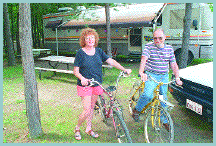
"Home is where you park it," a philosophical Jim Kimmins says of his RV-cum-residence. "We planned this out for eight years, and I think this is even better than we thought it would be," says his wife, Maralyn. The Kimminses, who've been on the road for about a year, used to park themselves in a far more traditional house in Canton.
They're part of a national boom in RV users. Sales of RVs, which for statistical purposes also include towable units such as campers and travel trailers, are expected to soar through the '90s as baby boomers enter the prime RV-buying years, age 45 to 54, according to the Recreation Vehicle Industry Association. According to a recent University of Michigan study, 44 percent of RV owners are 55 and older, while 39 percent are between the ages of 35 and 54.
The concept of living full time on the road is simple: Although far smaller than the average permanent home (the Kimminses' quarters encompass all of 300 square feet), today's motor homes provide comfortable, modern accommodations for their dwellers. RVers have refrigerators, computers, stereo equipment, microwaves and satellite dish-enhanced TVs at their disposal.
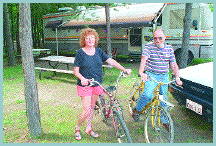
"I traveled for Chrysler for 30 years, going from airports to rental cars to hotels," says Jim Kimmins. "There's no Maalox or Tums in this lifestyle. The stress is gone."
Kimmins pauses. "Of course, if you don't like to tow or drive a motor home, then it's stressful - but you won't pick this lifestyle, either. If you want to sit at home and spend your retirement being a couch potato, this is not the lifestyle for you."
Rather, the life of a full-time RVer is nomadic, spent roaming from one campground to another with mostly the basic necessities. It is a chance to get back in touch with rustic America, something foreign to many urbanites.
"We take the back country roads, visit the small, little towns and meet people we've never had the opportunity to meet," Maralyn Kimmins says. "Having lived in the big city for so many years, you find there are things that happen there that don't happen in the smaller towns. Doing this really helps you regain faith in humankind and regain an appreciation for this nation that perhaps a person loses when living every day in corporate life."
This includes going to a local high school football game, participating in potluck dinners, going to band concerts and really becoming immersed in a community for weeks at a time.
RVers also disprove the adage that you can't take it with you. "The big advantage of this lifestyle is that you get to travel and see a lot, but you're also living at home," says Ron Hofmeister, who with his wife, Barb, has co-authored a book about full-time RV living called An Alternative Lifestyle: Living and Traveling Full Time in a Recreational Vehicle, and an RV-lifestyle newsletter, Movin' On. "If you have a house and wanted to do all this travel, it would be (cost) prohibitive."
"We don't have to worry about smoky motel rooms or sleeping in beds other people have slept in," says Barb Hofmeister. "Our home is always with us."

Depending on whether you buy new or used, and, of course the size of the vehicle, an RV suitable for full-time living ranges from around $40,000 all the way to $1 million for those bus-size behemoths used by rock stars. The Hofmeisters started out with a $30,000 vehicle and eventually upgraded to a larger, better-appointed model.
Rent, utilities, property taxes, maintenance costs and other fees associated with home ownership do not exist in the world of full-time RV residents. The Hofmeisters' monthly budget of $1,615 has only four major expenses besides their monthly RV payment: $350 for groceries, $300 for recreation or dining out, and $175 each for campground fees and fuel. The fuel is for both their RV and their accompanying Toyota pickup truck, which they use for excursions into town, as it's rather cumbersome to unhook an RV from its site just to go grocery shopping.
Hofmeister says even their budget can be chopped. "There are countless ways to lower campground costs, and $175 merely represents our experience based on a combination of membership parks, commercial campgrounds and public parks," he says.
Some parks reserve sites only for members, such as Smoke Rise, located east of Flint in Genesee County's Richfield Township. Smoke Rise, where the Hofmeisters and the Kimminses recently stayed, is a Coast To Coast campsite, meaning only members of that organization can stay there. Maralyn Kimmins says that by buying a membership prior to retirement and becoming full-timers, their campground costs are covered by $4-per-night vouchers.
The Hofmeisters get more mileage out of their campground budget by either "boondocking" (camping in roadside rest areas, parking lots and other safe and legal places to park) or by volunteering time at public parks.
A common type of public volunteering is called "campground hosting." A campground host is comparable to that of a park ranger proxy, assisting other campers with park information, rule interpretations, campsite selection and even emergencies requiring outside assistance.
Full-timers also pitch in when disaster strikes. When torrential rains flooded the Mississippi River a few years ago, many full-time RV dwellers revised their travel plans and headed to Iowa and Missouri to assist the cleanup effort.
Despite all the positives full-timers experience, they admit there are a few drawbacks. Minor expenses include mail forwarding and voice mail services - essential for full-timers because they don't have a permanent address and rarely hook a phone line into the RV.
"You'd better get used to the world of pay phones. Cellulars are nice - they're OK for emergencies - but they're not cost-efficient for everyday use," Ron Hofmeister says. "Any full-timer will tell you that not having a regular phone is the biggest drawback to this lifestyle."
"We have provisions to hook up a phone line, but the only time we use it is when we know we will be in one place for two or three months," Jim Kimmins says. "We call for messages daily and get first-class priority mail drops once a month."
Adds Maralyn Kimmins: "Because we don't have a phone, I can't access the Internet, which is something I'd really like to do. I feel in a way that I'm missing out on it."
Along with missing direct phone calls from children and friends, some full-timers miss having a permanent church or school system. (You don't have to be a retiree to partake of full-time RV living; younger people have been known to home-school their children.) They also sometimes have difficulty explaining the rationality of selling or giving away their worldly possessions in favor of life on the road.
"We trained our kids in terms of what we're doing," Barb Hofmeister says. "We told them, 'We're not jumping ship and we're not abandoning you. We want to keep in touch and we want you to call, and we will call back. And we will visit you, because our house has wheels."
"Much of our old furniture is divided up among our kids, and whenever we see them there's always a reminder of our former home there," says Jim Kimmins. "Most of our kids handled it pretty well, although we were asked a lot of times by one of our sons, 'Are you done yet?'"
"We know people very close to us who think - and have voiced to us - that what we are doing is absolutely crazy: 'You're so radical! How can you sell your house?'" he adds. "Let me tell you, I've had enough of shoveling snow! I've had enough of gardening! I've had enough of paying property taxes and association fees and getting nothing for it; to heck with that!"
This article originally appeared in The Detroit News.
Subscribe to:
Posts (Atom)